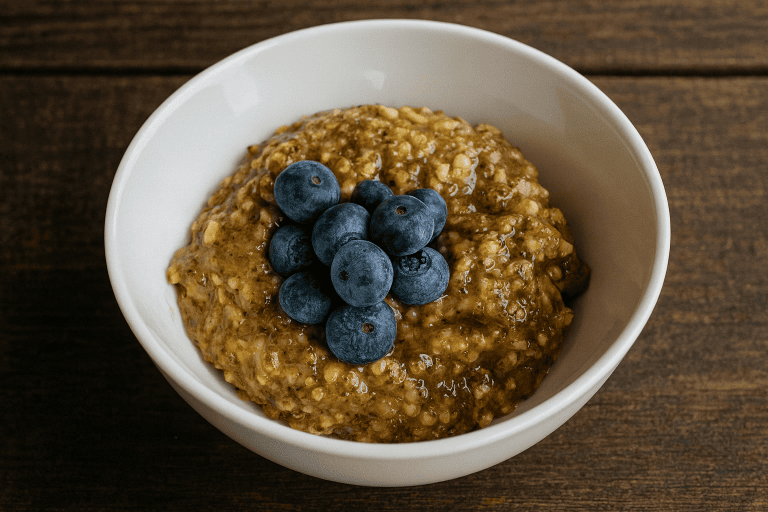
My high protein, low blood sugar, gut healthy, vegan, 8 Ingredients Plant Based Porridge!
Cozy up with my easy super-food porridge (or ‘oatmeal’ for US readers) — steel-cut oats, chia, flax, hemp, peanut butter, cinnamon, berries & an EVOO drizzle for a powerhouse plate! Since doing a coaching course in nutrition and healthy lifestyle changes with Harvard University, I’ve started increasing the amounts of plants I put in my meals, and advise my clients to do so too. This healthy plant based porridge recipe, is also a perfect vegan breakfast bowl, however I sometimes make it in the evening for a light dinner or dessert.
It’s:
✅ High: fiber + protein + omega-3 + antioxidants
✅ Gluten free (make sure they’re gluten free oats)
✅ Lactose free
✅ Gut-healthy
✅ Vegan
✅ Whole-food & nutritious
✅ Heart healthy + energy boosting + anti-inflammatory!
Why So Many Plant Based Ingredients?
The ’30 plants a week‘ idea comes from the American Gut Project (2018), which observed that people reporting >30 different plant foods per week had a more diverse gut microbiome than those eating ≤10, and that plant diversity explained more about gut differences than labels like “vegan” vs “omnivore.” Popularized by Dr Tim Spector and ZOE, the rule is a simple way to nudge variety—counting fruits, vegetables, legumes, whole grains, nuts, seeds, herbs, spices, even coffee and dark chocolate—because different plants deliver different fibers and polyphenols that feed different microbes. Reported benefits are richer microbial diversity and more short-chain-fatty-acid–producing bacteria (linked to gut lining health and lower bowel-cancer risk), plus generally better digestive resilience—though the number 30 target is only a suggestion not a definitive number.
Brief history of porridge/oatmeal
Porridge is one of humanity’s oldest cooked foods: long before widespread bread-baking, people simmered crushed grains in water into a hearty, spoonable meal. Around the world it reflected local crops—barley and wheat in the ancient Near East and Europe; millet and sorghum across Africa; rice as congee/zhou/okayu in East and Southeast Asia; maize as atole and polenta in the Americas; oats becoming iconic in Scotland and Ireland; and buckwheat or rye “kasha” in Slavic regions.
-
Scotland & Ireland: oat porridge and brose fueled workers and weathered winters.
-
China: rice congee (zhou) served plain or savory, nourishing from sick days to celebrations.
-
Nordic & Baltic regions: barley, rye, and oat porridges were daily staples.
-
Africa & South Asia: millet, sorghum, and cracked-wheat porridges (think ugali, dalia) power communities to this day.
-
America: corn-based atole is a beloved breakfast drink/porridge.
The Industrial Revolution popularised rolled oats and packaged “oatmeal,” cementing porridge as a breakfast staple even as processed cereals rose in the 20th century. Today it endures—sweet or savoury, dairy or plant-milk, stove-top or “overnight”—as a simple, adaptable bowl linking modern kitchens to ancient homes.
Why steel-cut oats?
Steel-cut oats are less processed than whole rolled oats, giving them a lower glycemic index, more fiber integrity, and longer-lasting energy. But if you can’t access steel-cut oats then whole oats are better than oat flakes or instant oats, that have much less fiber and spike your blood sugar, instead of a slow steady release.
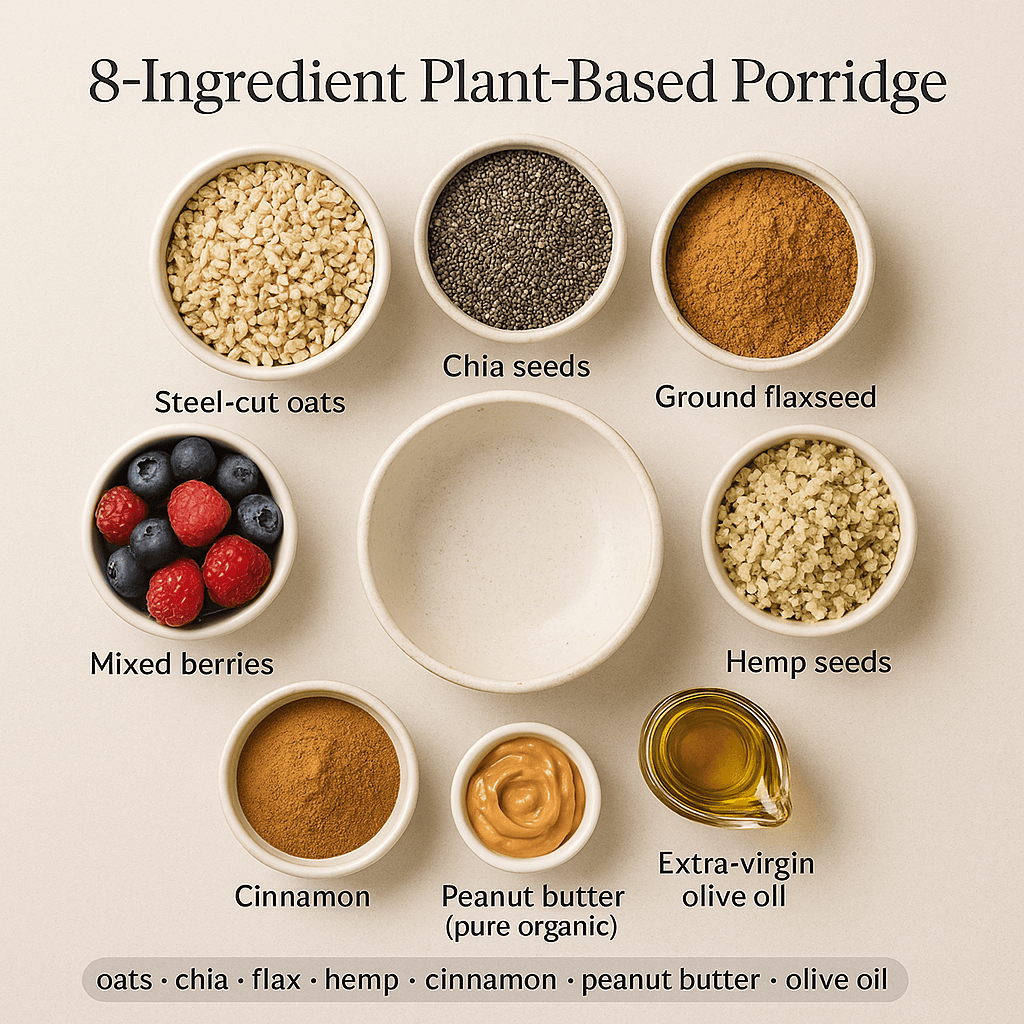
My 8 Plants Power Porridge Recipe (1 serving)
Ingredients
-
2 tbs steel-cut oats
- 1 tbs chia seeds
-
200 ml water (+ more as needed)
-
1 tsp ground flaxseed
-
½ tsp hemp seeds (or up to 1 Tbsp)
-
2 tsp cinnamon (Ceylon if possible)
-
½ tbs pure peanut butter
-
1 tbs extra-virgin olive oil (drizzle, off-heat)
-
berries (fresh or frozen, ideally organic)
-
Optional: protein powder, vanilla, other fruits or spices, or a touch of monk fruit/maple if you like it sweeter.
Method
-
Simmer the base: In a small pot, bring water to a gentle simmer. Stir in the oats and chia seeds and a tiny pinch of salt. Cook gently for 20 minutes (steel-cut oats are worth it!), stirring occasionally (or it will stick and harden at the bottom of the pan) and adding splashes of water to keep it creamy.
-
Stir in the power trio: When the oats are soft and porridge-thick, stir in ground flaxseed (AKA linseed), hemp seeds, and cinnamon. Cook 1–2 minutes more to bloom the flavors.
-
Finish & top: Remove from heat. Swirl in peanut butter. Bowl it up, drizzle extra-virgin olive oil (off-heat keeps those delicate compounds happy), and crown with berries. Sweeten to taste if desired (I use monk fruit or honey).
Personal tip: I also add a scoop of my protein powder and my creatine if having this in the morning and not as part of my dinner.
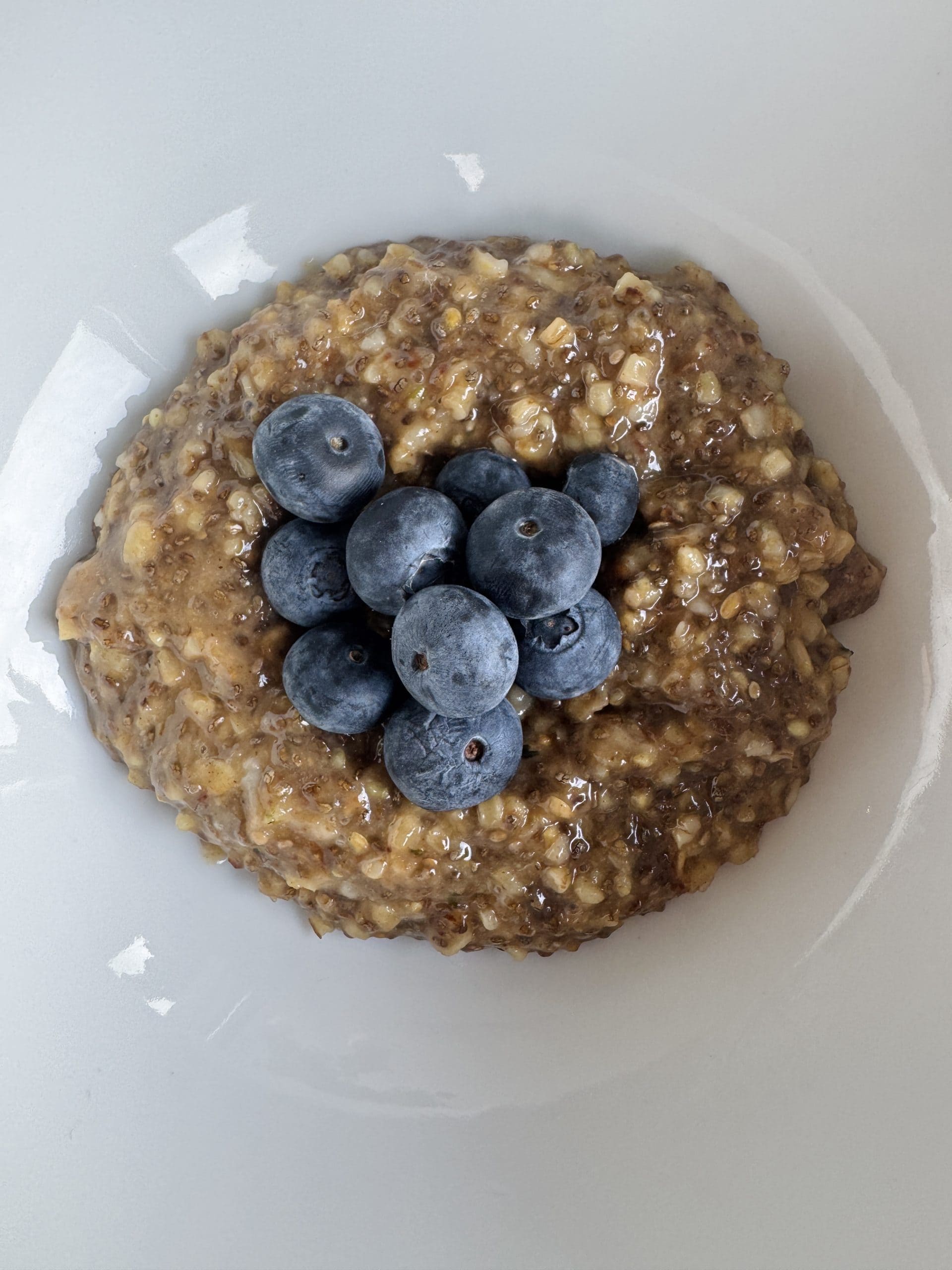
Benefits of the Ingredients (why it’s a powerhouse of health)
Steel-cut oats – gloopy goodness
-
High in soluble gel-forming fiber (β-glucan) → helps lower LDL cholesterol and steady post-meal glucose.
-
Lower glycemic impact than instant/rolled oats; very satiating.
-
Minerals: manganese, magnesium, iron, B-vitamins.
Chia seeds – tiny hydration bombs
-
Another gel-forming fiber that slows glucose absorption and supports gut health.
-
Plant omega-3 (ALA), plus calcium and magnesium for bones and muscle function.
- Refrigerate to prevent rancidity.
Cinnamon – warm sweet spice
-
Antioxidant; may improve insulin sensitivity and help blunt post-meal glucose.
-
Choose Ceylon (“true” cinnamon) to minimize coumarin (liver-irritant in cassia).
-
Portion: ½–1 tsp (1–3 g) most days is a sensible range.
Pure organic peanut butter – tasty creamy protein
-
Rich in protein, fiber, vitamin E, magnesium, niacin, and healthy fats for blood-sugar balance.
-
Promotes fullness; supports heart health when replacing refined carbs/saturated fat.
-
Pick “100% peanuts” (no added sugar/oils/salt).
-
NB: If allergic sub with almond butter, tahini, or omit from recipe + also mind quantity if cutting calories/fat in diet.
Hemp seeds – soft nutty heart shapes
-
A complete plant protein (~10 g per 3 tbsp) with a favorable omega-6:omega-3 ratio and some GLA.
-
Minerals: magnesium, zinc, iron; skin and potential PMS support (via GLA) suggested.
-
Refrigerate to prevent rancidity.
Ground flaxseed/linseed – powdered health hero
-
ALA omega-3 + lignans (phytoestrogens) → heart and hormone-supportive; may modestly lower LDL.
-
Mixed soluble/insoluble fiber aids regularity.
-
Use ground (whole seeds often pass through intact).
- Refrigerate to prevent rancidity
Extra-virgin olive oil (EVOO) – liquid gold
-
Rich in oleic acid (MUFA) + polyphenols (e.g., oleocanthal) → supports heart health, lowers oxidized LDL, anti-inflammatory.
-
Helps absorb fat-soluble nutrients (A, D, E, K) from your meal.
-
Keep in a dark bottle to protect polyphenols and add at the end of preparation to retain nutrients.
Berries (blueberries, raspberries, strawberries, etc) – antioxidant angels
-
Low-GI, high fiber + vitamin C, K, manganese.
-
Anthocyanins linked to improved endothelial function, insulin sensitivity, and brain health.
How they work together in a bowl
-
Oats + chia + flax fiber = cholesterol and glucose control + long-lasting fullness.
-
EVOO + peanut butter adds heart-healthy fats to steady energy and boost nutrient absorption.
-
Hemp boosts complete protein; berries add antioxidants and a low-sugar sweet lift.
Personal note: I find if I have half a bowl of this porridge in the evening, it helps me have an amazing night sleep! According to Chat GPT this is likely because my porridge’s ‘complex carbs, fiber, and magnesium help stabilize blood sugar and support serotonin and melatonin production, promoting calmness and deeper sleep’! I definitely don’t wake up during the night hungry and I do feel very relaxed and sleepy so… Each to their own as they say. Enjoy!
-➤ For more on Charlie and her work check out Indiv Yoga to learn about her corporate work, yoga and meditation teacher training courses and her yoga, and meditation retreats.