Do You Have A Healthy Information Diet, Or A Toxic One?
Many of us are careful about what we eat, or at the very least aware of what we eat in a day. We might read labels, and try to avoid ultra-processed, high sugar, high fat, high carbs, or junk foods. We’re perhaps aware of calories, nutrients, the timing of our meals, and how much we’re consuming. And most of us are aware of some of the effects our diet might be having on our long-term health. However, when it comes to our information diet, or what we feed our minds every day, most of us don’t question it at all.
How many of these are you ‘eating’ every day?
Social media/news/emails/podcasts/notifications/short videos/messages/Google/AI?
Very few people are pausing to ask, ‘What am I consuming?’ ‘How much am I consuming?’ ‘What are the long-term effects?’. Because just like your body has a diet, your brain has an information diet. And for many 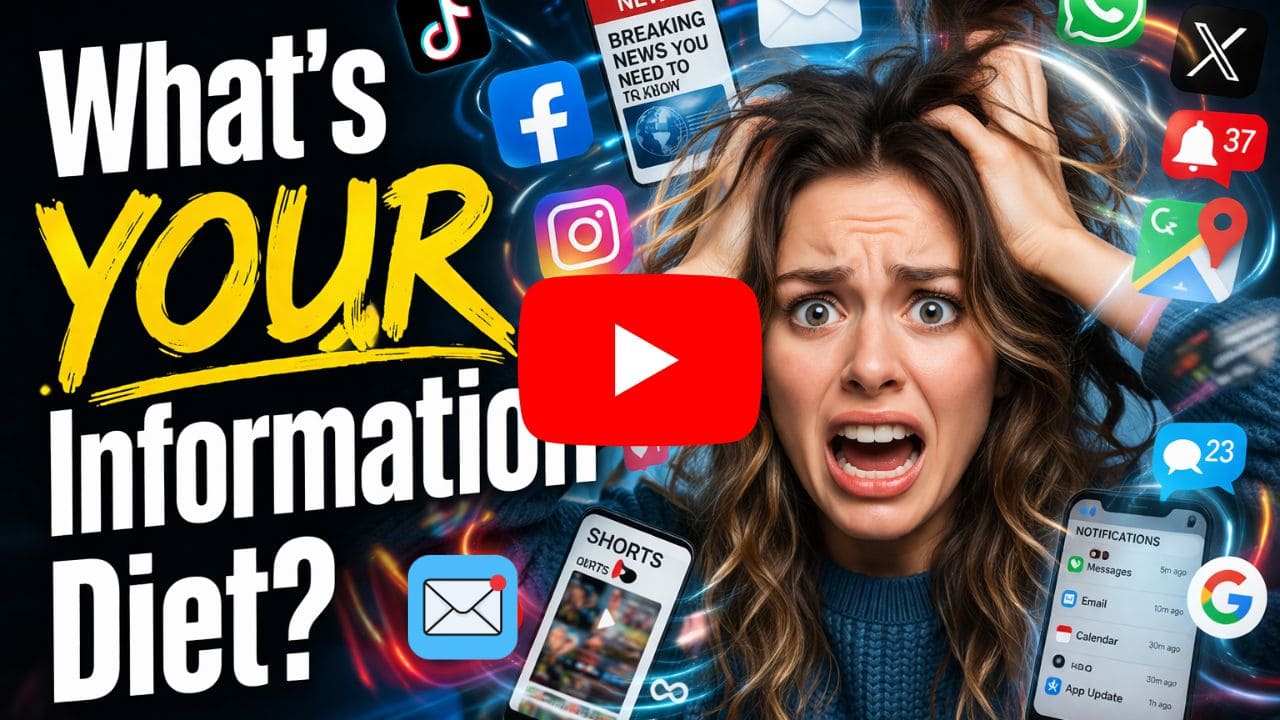 people the diet is a combination of over-consumption, poor quality, and very little time to digest and recover.
-➤ If you would prefer not to read, you can see this information on my latest YouTube video
Where do I come into this?
You may be asking ‘Why is a meditation and yoga teacher trainer writing about this?’. Well firstly, I remember becoming fascinated with this subject when I started my psychology degree in the 90’s and my interest in this has only increased with my work with burnt out corporate, or anxious adults, and children with ADHD, and mental health issues. I remember when the concept of electronic books was first mentioned, and as an avid reader swearing I’d never get one. I did. I also remember the very start of online shopping and thinking it would never take off, because customers would want to see and feel items in person. I was very wrong!
Secondly, my parents’ and my generation are the only ones who will every know what it was like to not live with information technology, and to have gone through the transition to needing and using it every day. Our generations remember what it was like to be bored or to wait patiently, and compare that to the instant stimulation of digital information at our fingertips. Our only sources of information were books or other people!
Lastly, one of the ways we can manage our information diet is with mindfulness and meditation techniques, something I’ve been practicing for over 3 decades, and teaching others for over 17 years.
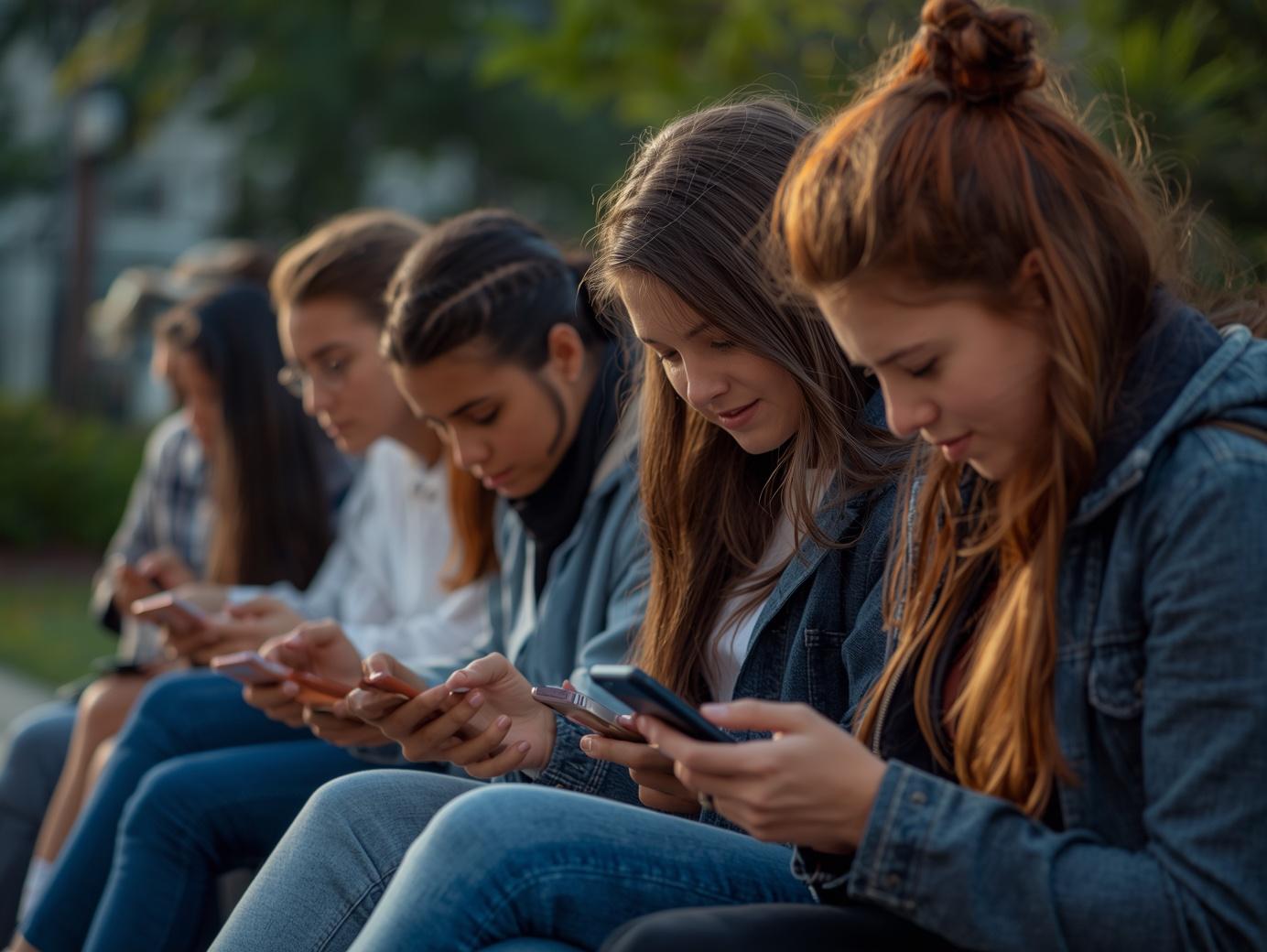 So What Is An Information Diet?
Your information diet is simply the quantity and quality of what you consume mentally each day.
Just like food, it has different components:
- Quantity: how much you consume
- Quality: what you consume
- Frequency: how often you consume
- Recovery: whether you allow time to digest or process
A healthy diet isn’t just about avoiding junk altogether, it’s about balance. And the same is true for your mind.
Are You ‘Overeating’ Information?
The human brain evolved in environments where information was scarce, slow, and meaningful, however today it’s become instant, endless, and algorithmically engineered to keep your attention (think Netflix and YouTube recommendations, or social media channels feeding you content tailored to the personal information it keeps of you).
This matters because of how the brain’s reward system works. Its dopamine reward system responds strongly to novelty, unpredictability, and reward, which is exactly what social media and digital platforms are designed to deliver. As behavioral addiction researcher Adam Alter explains in his book ‘Irresistible’, this isn’t accidental, and is how digital platforms are built to exploit these reward loops.
A study from the University of California Irvine found that the cognitive cost of this is measurable, and that frequent interruptions significantly increase stress and reduce focus.
A Junk Food Information Diet And Its Hidden Costs
Just like food, some information is nourishing, and some is toxic.
A junk food information diet is made up of content engineered for immediate stimulation, not long-term well-being. This includes:
- clickbait headlines
- outrage-driven news
- spam
- endless short-form content
- pornography
- algorithmic social media feeds designed for engagement, not depth
This kind of digital over-consumption doesn’t just pass through your mind, it actively reshapes how your brain functions, how you relate to others, and how you experience connection.
How Social Media and Pornography Affect the Brain and Relationships
Research into social media and mental health, as well as the effects of pornography on relationships, shows clear patterns.
This type of input tends to:
- overstimulate the brain
- fragment attention
- reinforce compulsive checking behaviours
The American Psychological Association has linked heavy media consumption to increased stress, showing that constant exposure to news and media is associated with higher stress levels.
At the same time, research into pornography and the brain shows overlaps with reward pathways, linking higher pornography consumption with reduced grey matter in reward-related brain areas.
This links to dopamine desensitization, where repeated over-stimulation reduces sensitivity to natural, slower rewards. This study shows that the more your brain adapts to high-stimulation digital input, the harder it becomes to commit to a relationship, and feel satisfied by the real-life experiences of relationships and intimacy.
 The Impact on Connection, Intimacy and Social Skills
 The Impact on Connection, Intimacy and Social Skills
Increased screen time is associated with higher loneliness and lower psychological well-being in adolescents. Despite being constantly ‘connected’, many people are experiencing less depth, less presence, and less genuine intimacy.
The Cognitive and Physiological Costs of A Toxic Information Diet
Over time, a poor information diet also impacts how your brain operates day to day.
1. Chronic Mental Stimulation & Anxiety
Constant input keeps the brain in a low-level activated state, making it harder to switch off, and more susceptible to anxiety.
2. Reduced Focus and Productivity
A study by the University of Minnesota showed that switching between content creates ‘attention residue’ where part of your attention remains stuck on the previous task, reducing performance.
3. Dopamine Burnout
Constant high-reward stimulation reduces motivation, patience, and satisfaction in slower, real-world experiences.
4. Sleep Disruption
A Harvard Medical School study showed how evening screen exposure affects both mental stimulation and biology because blue light suppresses and disrupts sleep cycles.
Therefore a junk food information diet leaves us:
- overstimulated
- under-satisfied
- less connected to others
- and less able to focus, rest, or engage deeply
Constant digital consumption doesn’t just change what we think, but changes how we relate, connect, and experience life.
So What Does a Healthier Information Diet Look Like?
A healthy information diet isn’t about rejecting technology, but about using it consciously. Here are some ideas:
1. Reduce “Empty Calories”
- Limit social media windows
- Avoid reactive news consumption
- Be intentional, not automatic
2. Increase “Nutritious Input”
- Books
- Long-form content
- Knowledge enhancing material
3. Introduce “Information Fasting”
- No-phone mornings
- Tech-free evenings
- Phone-free rooms
- Tech free meals or conversations
- Silent walks
4. Allow Time for “Digestion”
- Lower your expectation of having to do everything on the same day, or of finding out the answer straight away.
- Create gaps between activities, instead of filling every moment with content.
- Practice stillness or reflection (e.g. meditation, walking) to remember, fully absorb, or integrate what you’ve consumed.
Steps To A Healthy Information Diet
No one can tell you how much, or what type, of information you should be consuming. It’s very individual and requires some self-reflection from each of us. What I can do is give you some pointers from all the research I’ve done on this, from my own experience, and from my work with adults and children.
The very first thing you need to do, is accept that your information diet is not a good one, and decide that you want to make some changes towards a healthier one. In the same way you’d begin tweaking your food diet if you became overweight, or found out you were on the path to diabetes or cancer.
Secondly, I suggest picking 4 inputs of information (eg. Instagram, emails, YouTube and ChatGPT) and thinking of them as your protein, fats, carbohydrates, and fiber. You need all of them in your diet, or day-to-day life, but when and where in your day can you reduce them? There’s no need to make drastic unsustainable changes, just pick 4 of your information channels and work on reducing those ones for now.
Lastly I suggest spending some time meditating on the following questions, and then to bring them up as discussion points with people in your life whose views you respect:
Questions To Reflect On Alone And With Others
- What percentage of what I consume actually improves my life?
- Do I feel calmer and happier afterwards, or more anxious, sad, stressed, scared, or envious afterwards?
- When was the last time I sat or walked in silence without input?
- Am I choosing what I consume or is it being fed to me?
- What do I enjoy doing that doesn’t involve consuming toxic information?
- What small steps can I take to consume less junk, or replace some of it with more nutritious information?
 The #1 Information Diet Challenge – Boredom
 The #1 Information Diet Challenge – Boredom
Besides the neurological or cognitive issues of addiction and dopamine, the number one hurdle to a healthier information diet is boredom. Take a moment to reflect on your own relationship between being bored and your information diet. Boredom is truly society’s biggest challenge now, especially with the younger generation: being OK with, managing, and re-defining our relationship with, boredom. This is a whole other article in itself, but I’ll leave you with 4 complementary and interchangeable solutions:
- Learning to connect with ourselves – feeling OK about just being with our own thoughts, emotions, sensations, and senses.
- Learning to connect with others, without the use of technology.
- Learning to connect with nature and our environment – looking up, and out into the world.
- Learning to connect with something greater than yourself (not necessarily religious) – prayer, meditation, God, universal energy, community, charity etc.
Final Thoughts
Our great-grandparents would think we’d gone crazy if they could see the stress, pressure, and speed we’re living in thanks to information. You could argue that the world is a different place now, that it’s developing faster, is more productive, and the pressure and expectations on us is greater. But is that necessarily a good thing, and does it need to be our default mode every minute of the day?
Our brains have not adapted yet (and perhaps never will) to take in this amount of stimulation every day. The negative effects are so immense, that I’m hoping for a revolution where humans find a way to have a healthy relationship and balance with information. Your mind is shaped by what you consume, and right now most people are overfed, undernourished, mentally overstimulated, and stressed.
If you wouldn’t eat junk food all day, why feed your brain the equivalent?
A calmer, clearer mind doesn’t come from adding more, but from consuming less, and choosing better.
Bon Appétit!
If you want to connect with me (for short periods of time!) you can find me on ‘Indiv Yoga’ on Facebook, Instagram and YouTube. A healthier option is to join me on one of my retreats or on my Yoga Alliance 200 hrs Teacher Training Course in France. For corporate work click here.